World Zoonoses Day: Raising Awareness for Emerging Viral Threats
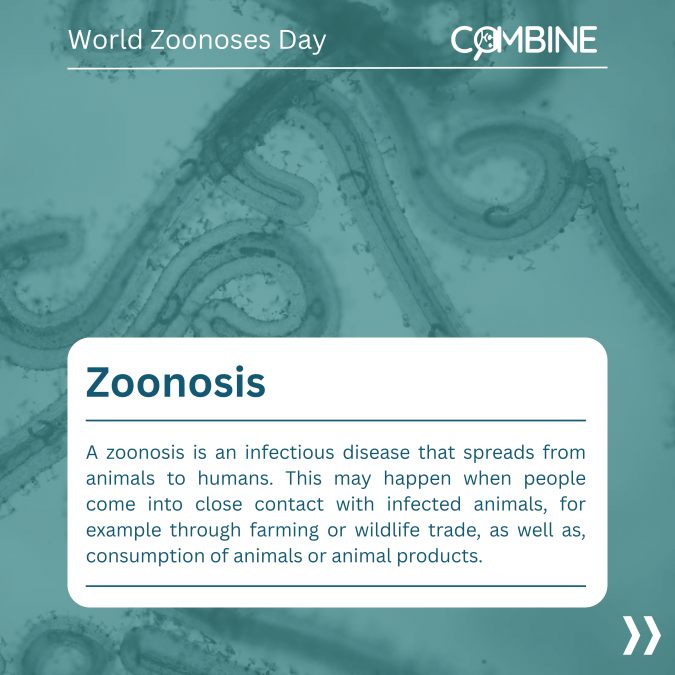
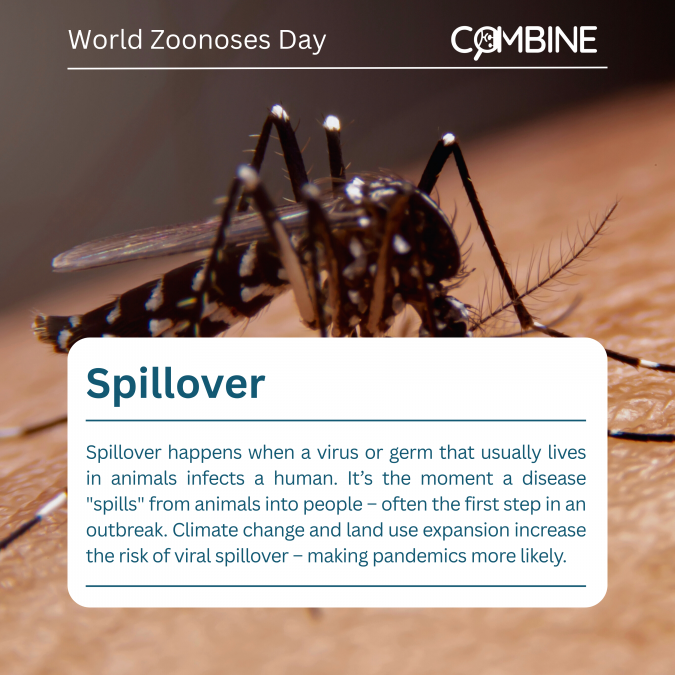
Every year on World Zoonoses Day, global attention turns to diseases that can jump from animals to humans – so-called zoonoses. Well-known examples include Influenza, Rabies, Ebola, and Marburg virus. These pathogens remind us of the importance of vaccination, responsible animal care, food safety, and environmental hygiene in reducing the risk of spillover events and preventing future outbreaks.
We want to take today as an opportunity to strengthen awareness of the key terms and concepts surrounding zoonotic diseases. Check the visuals below for an overview explaining essential terminology and facts.
Studying Marburg Virus Entry
Within the COMBINE project, we use Marburg virus (MARV) – a zoonoses – as a model system to deepen our understanding of how viruses enter human cells. MARV is a highly infectious and often lethal filovirus that causes severe hemorrhagic fever and carries significant epidemic potential.
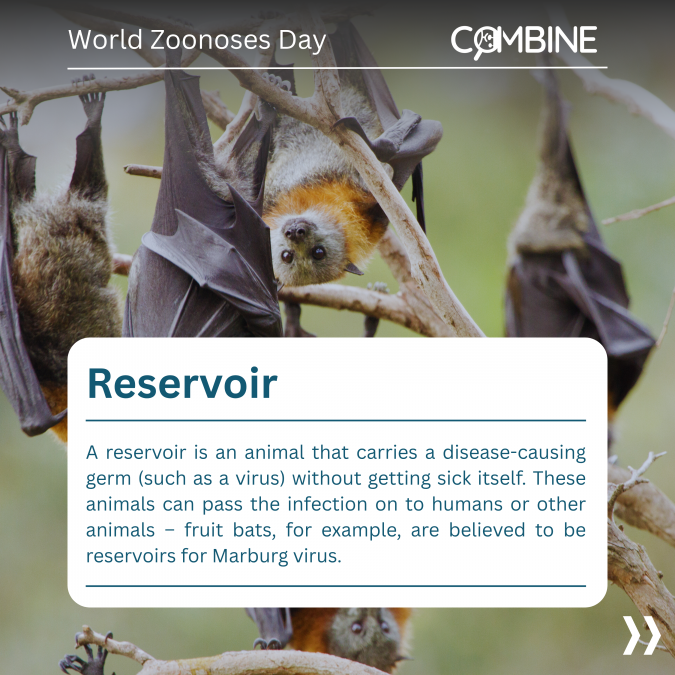
The natural reservoir of Marburg virus is fruit bats, which are widely distributed across Africa. Human infections typically occur through direct contact with contaminated body fluids or through the handling and consumption of infected bushmeat. By studying MARV’s interaction with host cells, COMBINE aims to generate insights that can support improved pandemic preparedness and the development of future antiviral strategies.